A Legacy Forged in Fields: New Holland's Historical Impact on Agriculture
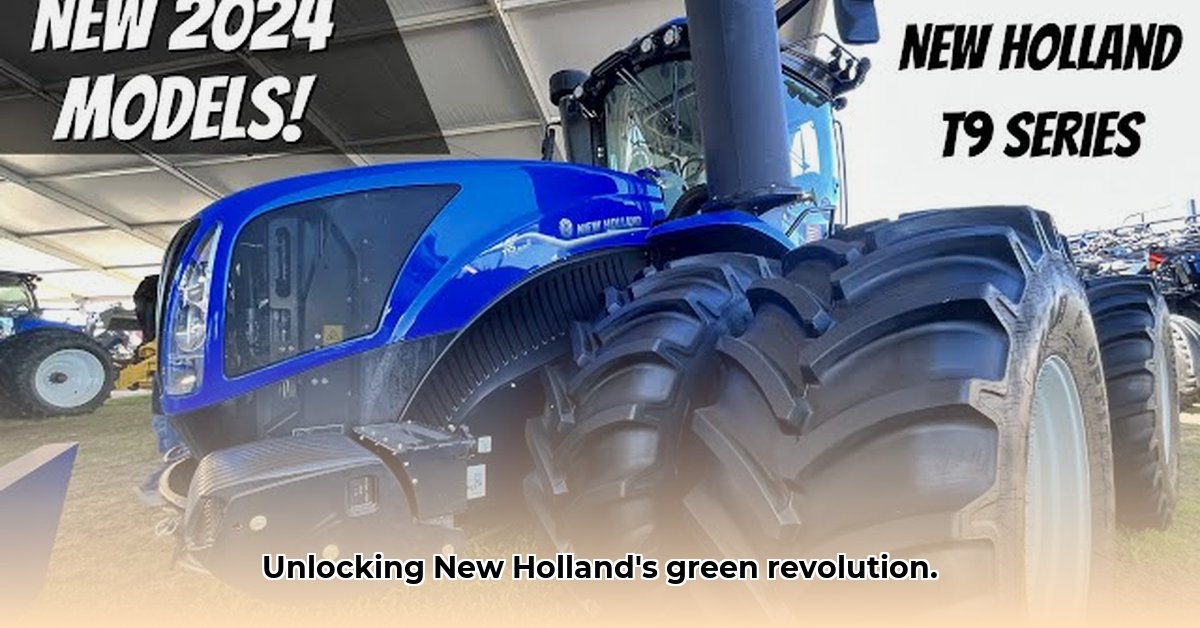
New Holland's story is inextricably linked with the evolution of agriculture. From its humble beginnings to its current position as a global leader in agricultural machinery, its journey reflects both remarkable technological advancements and the ongoing tension between agricultural productivity and environmental sustainability. The company's growth, fueled by strategic mergers and acquisitions, has resulted in increasingly powerful and efficient tractors. This progress, however, has not been without its environmental cost. The increased reliance on fossil fuels and the resource-intensive manufacturing processes raise critical questions about New Holland's overall impact on sustainable farming practices. How can we reconcile the undeniable benefits of increased food production with the urgent need to mitigate the environmental consequences? This question forms the core of our analysis. Do the advancements in tractor technology outweigh the environmental costs? For more information on smaller New Holland tractors, see this page.
Technological Advancements & The Sustainability Imperative
Modern New Holland tractors showcase impressive technological feats. Features like GPS-guided implements optimize planting and fertilization, minimizing resource waste and maximizing crop yields. Fuel-efficient engines, while still reliant on fossil fuels, promise lower carbon emissions compared to older models. While these advancements are significant steps towards sustainability, a complete picture requires a more critical examination. The manufacturing process itself presents a substantial environmental burden, consuming vast amounts of energy and materials. The "cradle-to-grave" carbon footprint of these machines, encompassing manufacturing, operation, and disposal, remains a significant concern. Dr. Anya Sharma, Agricultural Sustainability Expert at the University of California, Berkeley, notes, "While efficiency improvements are welcome, we must critically assess the entire lifecycle impact to achieve genuine sustainability." This necessitates a move beyond incremental improvements and a focus on radical innovations.
The Environmental Footprint: Challenges and Opportunities
The environmental impact of large-scale agricultural machinery manufacturing is undeniable. The production of New Holland tractors contributes significantly to greenhouse gas emissions and waste generation. The lifespan of these machines also plays a crucial role. Are they designed for longevity and repairability, or do they contribute to a cycle of continuous production and disposal? Professor David Miller, Head of Mechanical Engineering at Cornell University, argues that, "Designing for durability and recyclability is paramount. We need to move towards a circular economy model to minimize waste and resource consumption." This highlights the need for more sustainable manufacturing processes, a crucial challenge for New Holland and the broader agricultural machinery industry. However, opportunities exist; the potential for innovation in areas like electric tractors and enhanced precision farming tools could significantly reduce environmental impact.
Shared Responsibility: The Roles of Stakeholders
Sustainable agriculture requires a multi-pronged approach involving all stakeholders. Farmers need access to information, financial incentives, and technological support to adopt sustainable practices. CNH Industrial, New Holland's parent company, bears the responsibility of investing in and developing truly sustainable technologies, promoting transparency in their environmental impact assessment, and actively contributing to a circular economy framework. Governments play a crucial role through supportive policies, regulations, and fiscal incentives. Finally, ongoing research is vital to fully understand and mitigate the long-term environmental consequences of agricultural machinery.
Conclusion: Charting a Course Towards a Sustainable Future
New Holland's impact on sustainable agriculture is multifaceted. While technological advancements offer opportunities for increased efficiency and reduced emissions, challenges regarding manufacturing processes and reliance on fossil fuels persist. Progress requires a collaborative effort among farmers, manufacturers, policymakers, and researchers. The shift towards electric tractors, the adoption of circular economy principles, and a commitment to transparency are critical steps. Future research should focus on developing more sustainable manufacturing processes, exploring alternative energy sources, and promoting the widespread adoption of precision farming technologies. Ultimately, the future of sustainable farming depends not just on technological innovation but also on a shared commitment to responsible agricultural practices and informed decision-making.